
Nails
A nail to suit every job, it pays to use the correct type.

These large round head nails are mostly used for rough carpentry where appearance is not important but strength is essential. They are inclined to split a piece of wood. Sizes from 20- 150 mm (0.75in - 6in).

Most suitable for joinery work where appearance is important since they can easily be punched below the surface. They are less likely to split the wood if driven in with the longer sides parallel to the grain. Sizes from 12-150 mm (0.5in - 6in)

Stronger than oval wire nails, they can easily be punched below the surface of the wood. Sizes from 12-150 mm (0.5-6in)

A short nail with a wide, flat head, the tack is used for fixing carpets to floorboards and for stretching fabric on to wood.

Round lightweight nail used for cabinet-making and for fixing small mouldings into place.
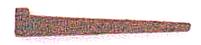
Rectangular, they have an L-shaped head and are nearly always used for nailing floorboards to joists. Sizes from 25-150 mm (1-6in).

Made of hardened steel, this nail is used to fix wood to brick, breeze block and most types of masonry.
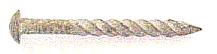
Twists into the wood. These comparatively expensive nails offer a more permanent, screw-like grip than plain nails.
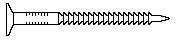
Useful where very strong joints are required. The sharp ridges round the shank become embedded in the wood to give a tight grip.
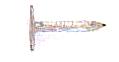
Made of galvanized steel, with a large, flat retaining head, this nail is most suitable for soft materials such as plasterboard and roof felt.
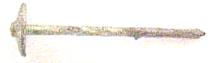
For fixing corrugated sheeting to timber. The twisted shank and inverted cup head produces a very strong purchase.

For reinforcing a weak wood joint or for securing mitred or butt joints in rough framing.

Rectangular in section, they are difficult to remove and provide a very strong fixing in wood and pre-drilled masonry. Sizes from 25-150mm (1-6in).

These have a diamond-shaped head which is virtually hidden when hammered into hardboard. Sizes from 9-38mm (3/8-1.5 in).

A small nail without a head. They are used mainly to hold glass in window frames before applying putty which covers them up. Sizes from 12-19mm (0.5-0.75in)

Available in chrome, brass and other metallic finishes, they are used as a secondary fixing with tacks. The dome head gives a decorative finish when nailing chair coverings into place. Various head sizes are available.
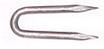
U-shaped round wire nails with two points to hold lengths of wire in position. Some staples have an insulated lining for fixing flex and electric cable.


 Top
Top